

Most people breaking into data start by collecting tools.
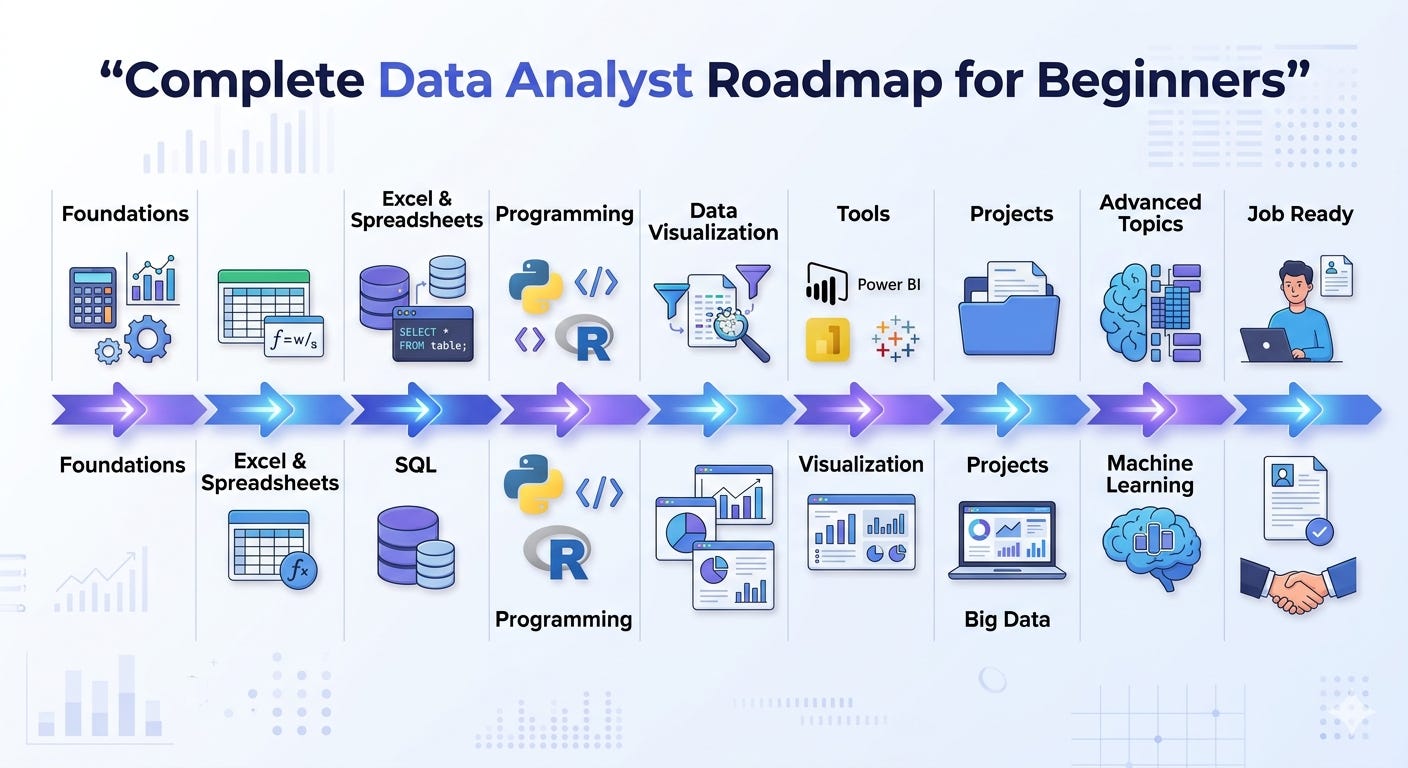
They open a roadmap, see 14 things on it, and decide the plan is to learn all 14. SQL, Python, R, Tableau, Power BI, statistics, machine learning, a cloud certification, some Git, maybe Spark because a job posting mentioned it once. They spend 8 months grinding through tutorials for tools they’ll never touch in an entry-level role.
Then they apply, get nothing back, and assume they need a 15th tool.
Here’s what’s actually happening on the other side of that application.
A hiring manager has 300 résumés for one junior analyst opening. She’s not reading them. She’s scanning them for 15 seconds each, looking for a reason to say no. Half the candidates list 11 tools and can’t demonstrate real fluency in any of them. She’s seen the same 4 Coursera certificates 200 times this month. Nothing on the page tells her you can actually do the job on day one.
The gap isn’t that you know too little. It’s that you spread yourself across 12 tools when the job runs on 3. Depth in the 3 that matter beats a surface tour of everything. That’s the whole game, and almost nobody plays it.
Here are the 3 things, and how to prove each one.
1. SQL is the tool that gets you past the résumé screen.
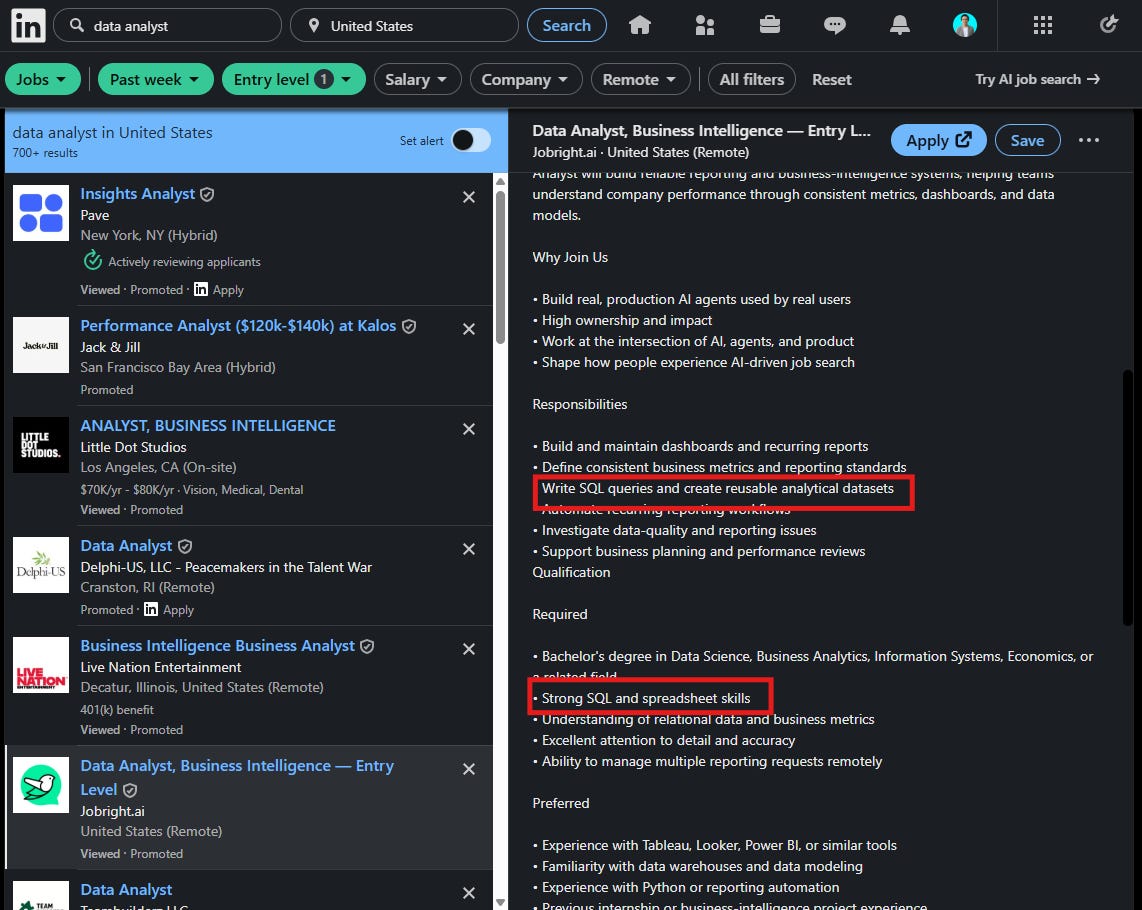
Pull up 20 junior analyst postings right now and count how many require SQL. It’ll be close to 20. This is the one non-negotiable technical skill in the field, and it’s the first filter most companies apply.
You don’t need advanced SQL. You need to join tables, filter, group, aggregate, and write a subquery without looking it up. That’s a few weeks of real practice, not 8 months.
2. Excel or Google Sheets is the tool they actually watch you use.
People skip this one because it feels too basic to list. That’s the mistake. The technical interview for a lot of junior roles is somebody sharing their screen and asking you to build a pivot table, write a VLOOKUP or XLOOKUP, and clean a messy dataset live.
You don’t need both. Pick the one the companies you’re targeting use and get genuinely fast in it. Fast enough that you’re not thinking about the keyboard while someone watches you work.
3. One BI tool. One.
Tableau or Power BI. Not both. Learn one well enough to connect a data source, build a dashboard that answers an actual business question, and explain why you chose each chart.
The reason “one” matters: a candidate who knows Power BI cold reads as competent. A candidate who lists Tableau, Power BI, and Looker but can’t build a clean dashboard in any of them reads as a tutorial-follower. Hiring managers can tell the difference in about 30 seconds.
This is exactly the sequence we run inside Analyst Hive, one tool at a time, in the order that maps to how you actually get hired. Quick heads up on that, the price goes up soon. It’s $19/month right now, and that ends. Starting 9/1/26 it’s $29/month. If you’re going to join, join before then.
It's $19/month right now, and that ends. Starting 9/1/26 it's $29/month.
4. The 4th “thing” isn’t a tool. It’s proof you can use the first 3 together.
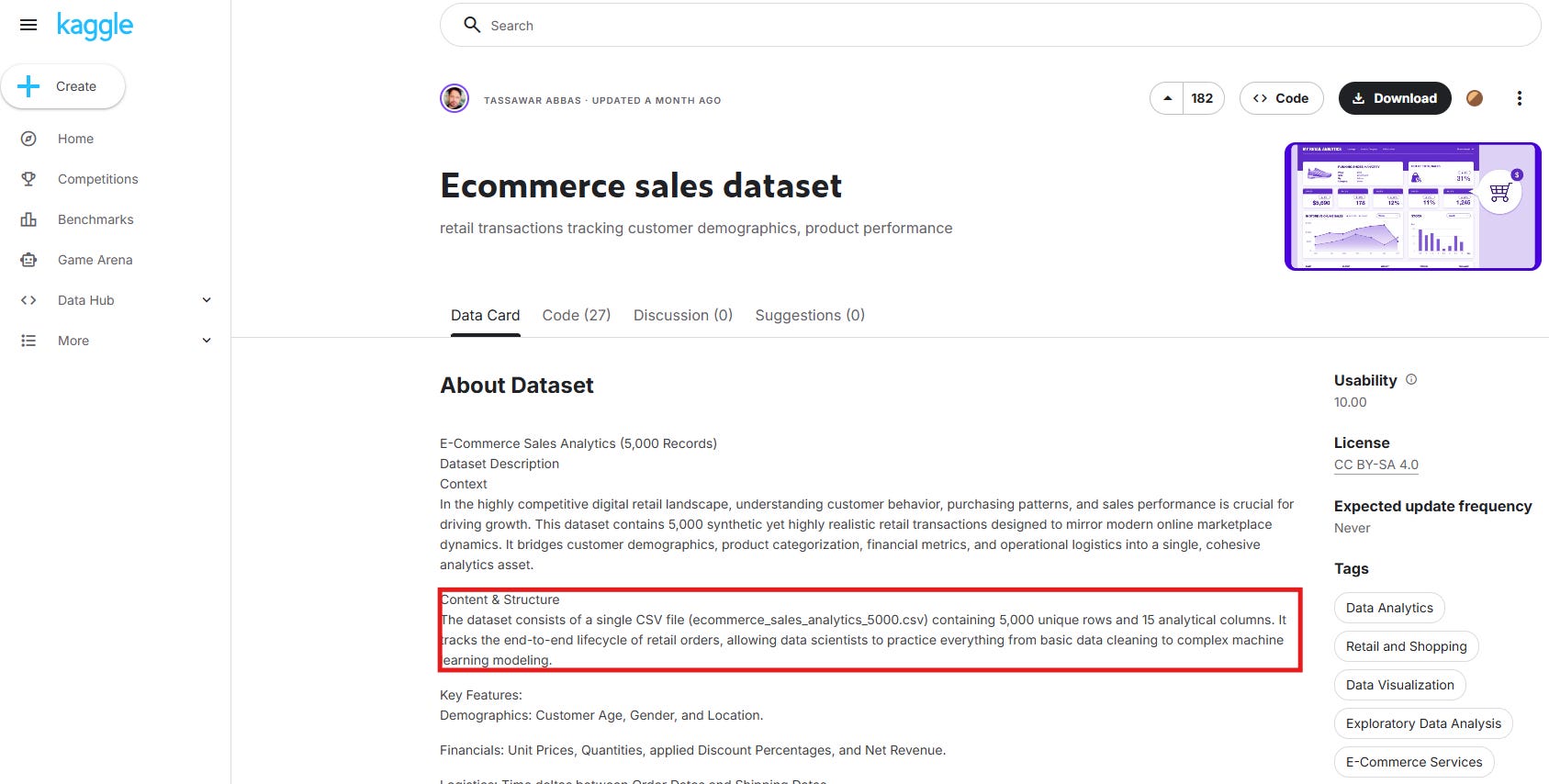
Three tools listed on a résumé is still just a list. What converts is one project where a hiring manager can watch you use all 3 in sequence: SQL to pull and shape the data, Sheets or Excel to clean and check it, a BI tool to turn it into something a decision-maker would actually read.
Not 6 disconnected portfolio pieces. One end-to-end project that looks like the job. That single artifact does more than any certificate on the page.
5. Every extra tool you add is working against you.
This is the part people get backwards. Listing Python, R, Spark, and 3 cloud platforms on a junior application doesn’t make you look more qualified. It makes you look like you learned the roadmap instead of the job.
Python shows up on every bloated curriculum, and for entry-level analyst roles it’s mostly noise on the résumé. It signals you spent months on something the job screen isn’t asking for while you were thin on the 3 things it is asking for. Depth reads as competence. Breadth reads as anxiety.
Cut the list to the 3 that matter and let each one be undeniable.
The candidate who gets hired isn’t the one who knows the most tools. It’s the one a hiring manager can picture doing the job on Monday.
Three tools, used together, proven once. That’s a Monday-ready candidate. Fourteen tools and no project is a roadmap-follower, and there are 300 of those in the stack already.
Analyst Hive is the community and step-by-step path for exactly this: SQL, then Sheets or Excel, then one BI tool, then the single portfolio project that ties them together and reads like a real job. No bloated roadmap, no 14-tool detour. One thing before I let you go: the $19/month price is ending. Starting 9/1/26 it becomes $29/month. Lock in $19 before 9/1 here:
Starting 9/1/26 it becomes $29/month. Lock in $19 before 9/1
What’s on your current “to learn” list that you now suspect is on there for no reason? Reply and tell me the tool. I’ll tell you straight whether a hiring manager cares.
P.S. If your résumé lists more than 5 tools right now, that’s not a flex. That’s the thing quietly getting you filtered out. Cut it to 3 and watch what happens.
Talk soon,
Ian